
L. Frank Baum, 1900
The Wonderful Wizard of Oz word cloud
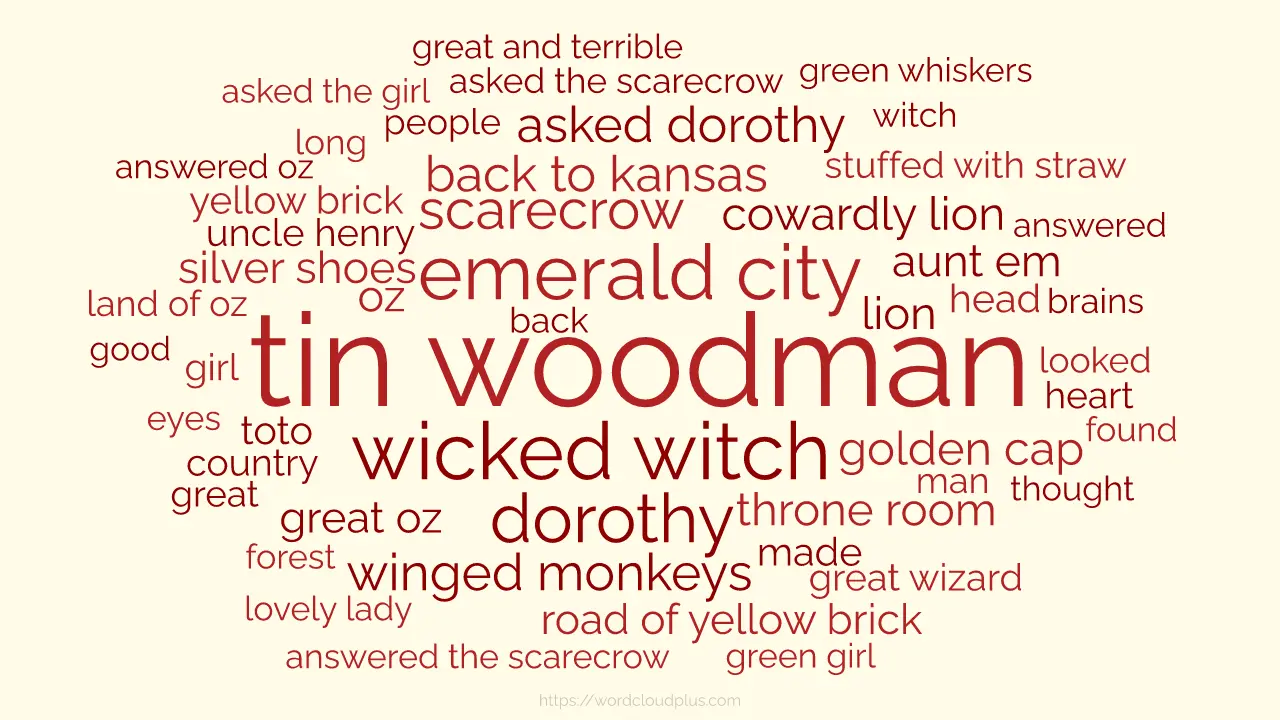
A word cloud of Baum's The Wonderful Wizard of Oz: Dorothy, the Tin Woodman, the Emerald City and the places and objects of the journey. With ideas for classroom use.
The source
Novel in 24 chapters, first published 1900
The Wonderful Wizard of Oz is in the public domain. Project Gutenberg publishes the full text free, so you can paste it into WordCloud+ yourself.
Project Gutenberg eBook #55How we made it
Made in WordCloud+ from the text of the book. Single words and multi-word phrases are ranked together, so names such as tin woodman and places such as emerald city appear as one term. The settings behind this image were not recorded, so we do not quote a stop-word list or term count.
Read it carefully
Word size shows how often a word or phrase occurs. It does not measure how important a character or theme is, and a name used in several forms is split across several smaller terms.
What this cloud can show
- The travelling companions dominate: tin woodman, dorothy, scarecrow, cowardly lion and toto, with the wicked witch and winged monkeys as the main threats.
- Places and objects map the journey: emerald city, yellow brick, road of yellow brick, throne room, golden cap and back to kansas, Dorothy's goal throughout.
- In the book Dorothy wears silver shoes, not the ruby slippers of the 1939 film. The cloud makes a good prompt for comparing the novel with adaptations.
- Brains and heart appear, but courage does not. Ask students how the Lion's wish is expressed, then check the text.
Try this in class
- 1Create clouds for the early, middle and late chapters and compare how the places and dangers change.
- 2Use Replace to merge names that are split across terms, such as oz, great oz and great wizard, before comparing characters.
- 3While you have fewer than three projects, the Projects page offers a Quick Start demo project built from this book, so you can explore it without pasting anything.
Start with a question, then read the text.
Use a cloud to find patterns worth discussing, then read the passages behind them.