
F. Scott Fitzgerald, 1925
The Great Gatsby word cloud
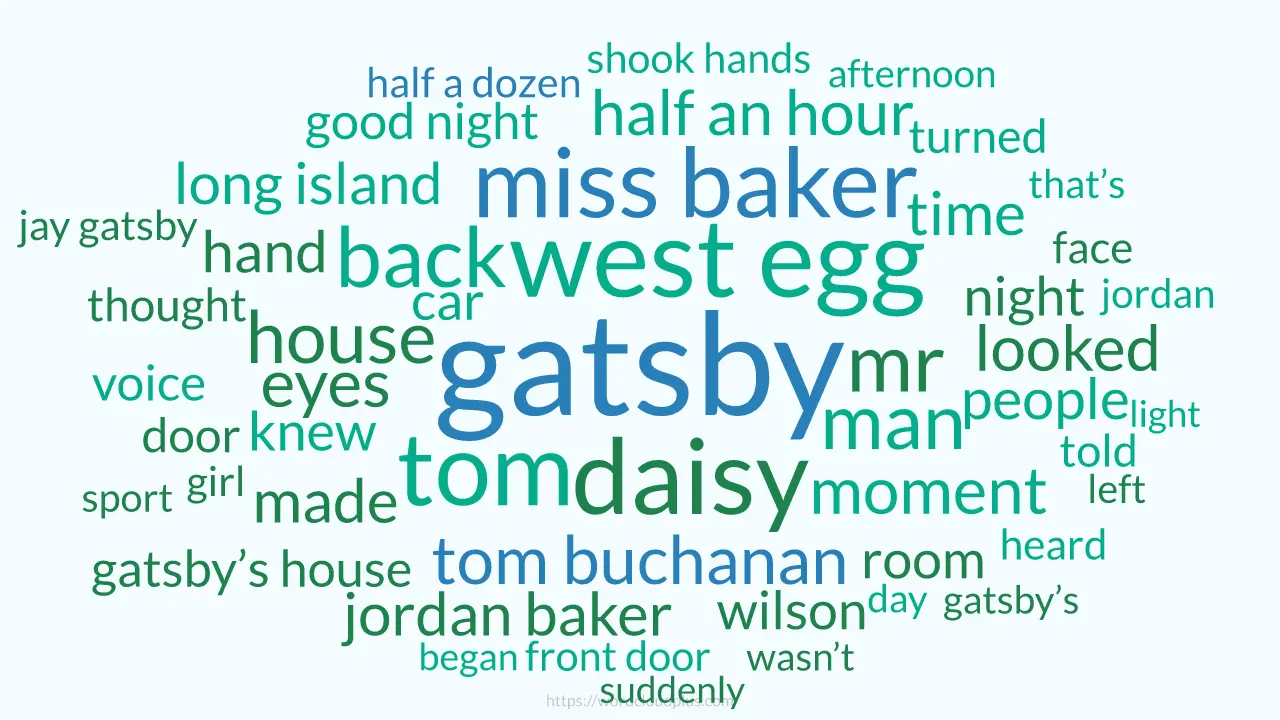
A word cloud of Fitzgerald's The Great Gatsby: Gatsby, Daisy, Tom, West Egg and the language of time and place in the novel. With ideas for classroom use.
The source
Novel in nine chapters, first published 1925
The Great Gatsby is in the public domain. Project Gutenberg publishes the full text free. The whole file, with its licence text, runs past the 50,000-word limit of the no-sign-up creator, so paste the novel without the licence, or a few chapters at a time.
Project Gutenberg eBook #64317How we made it
Made in WordCloud+ from the text of the book. Single words and multi-word phrases are ranked together, so names such as tom buchanan and places such as west egg appear as one term. The settings behind this image were not recorded, so we do not quote a stop-word list or term count.
Read it carefully
Word size shows how often a word or phrase occurs. It does not measure how important a symbol is: the green light matters in the novel but is not large in this cloud.
What this cloud can show
- Gatsby is the largest term, with tom, daisy, miss baker, jordan baker, tom buchanan and wilson around him.
- Nick Carraway, the narrator, does not appear in the cloud. He tells the story as I, which is a useful point for discussing first-person narration.
- Place terms such as west egg, long island, house, gatsby's house and front door show how much of the novel is set around homes.
- Time phrases recur: half an hour, moment, afternoon, night, good night. Sport appears too, largely from Gatsby's habit of calling people old sport.
Try this in class
- 1Create a separate cloud for each of the nine chapters and compare how Gatsby and Daisy move through the story.
- 2Use Replace to bring together names that are split, such as jordan, miss baker and jordan baker.
- 3Select a term such as sport in the cloud and open its References tab to read every passage it comes from.
Start with a question, then read the text.
Use a cloud to find patterns worth discussing, then read the passages behind them.